Farmers Face Difficulties in Plowing, Cultivation, and Rice Harvesting Due to Difficulty Buying Fuel and Rising Prices
November 16
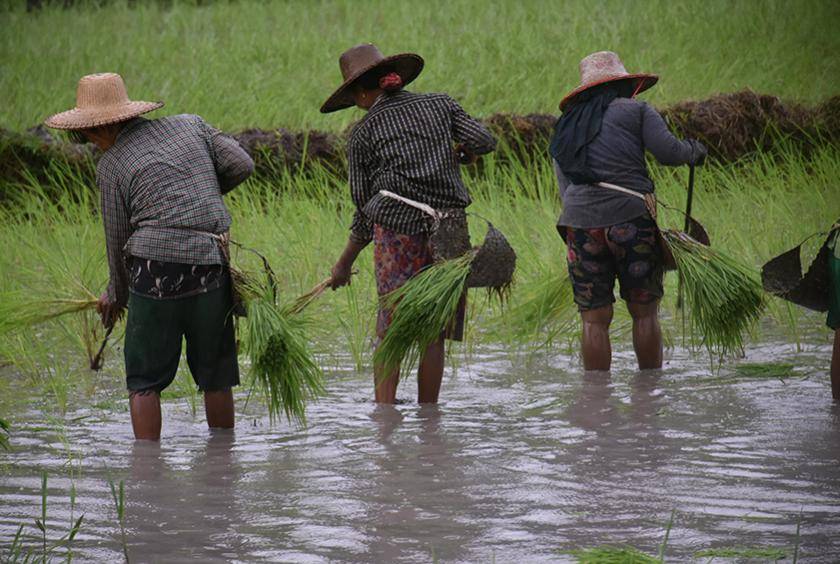
Although fuel is being provided under a natural disaster recovery program so that flood-affected farmland in Ayeyarwady Region can be re-plowed and cultivated, farmers are facing difficulties in plowing, cultivation, and monsoon rice harvesting because they are not receiving sufficient quantities, fuel is hard to buy, and prices are rising, according to local farmers.
The current period is when winter crops such as black gram and chili are to be plowed and planted, and the time for harvesting monsoon rice is also approaching, but because fuel is difficult to buy, fuel prices are rising, and rice harvesting machine rental fees are also rising, farmers' cultivation costs and harvesting costs are increasing further, it is learned.
"You can't buy fuel whenever you want. Where it is available, you have to pay a high price to buy it. Now is the time to plow for planting black gram and chili, so if fuel is unavailable, I worry that we won't be able to plant in time. Monsoon rice is also about to be harvested, so on the other hand costs are rising," a farmer from Ayeyarwady Region said.
According to a statement issued by the Ayeyarwady Region government of the junta, there are a total of 233 fuel sales shops in the region, including 3 village fuel sales shops, and sales are being made in fixed quantities to motor vehicles, motorcycles, and three-wheeled vehicles by scanning the QR Code/Bar Code included in the Wheel Tax according to even and odd days.
In addition, it stated that the fuel quota (PO) for each shop is calculated based on the quantity sold by scanning QR Code/Bar Code during the previous week, and fuel is allocated weekly every Saturday for one week so that it can be sold from Sunday to the following Saturday.
"We hear that fuel is available at fuel shops, but you can't buy as much as you need. The big fuel shops are reselling most of the fuel quotas they receive on the outside black market. Buying there at a higher price is making cultivation costs higher for farmers," a farmer from Hinthada said.
In Ayeyarwady Region, fuel shortages and rising prices are not a problem that has emerged only this year; they have been a difficulty farmers have faced since the start of the monsoon season when farmland begins to be plowed, and during this year's early monsoon season as well, due to black-market fuel sales, the price of one liter of fuel rose to around 6,000 kyats, according to accounts from local farmers.
Similarly, rising fuel prices are directly affecting not only agricultural operations but also the livelihoods of fishing families in coastal areas of Ayeyarwady Region, and fishermen operating mechanized boat fishing businesses are facing higher operating costs as well as difficulties in the daily travel of local people, it is also learned.
MyoTaw News Channel

 Video
Daily NEWS