
 Video
Local News
November 6 Evening News
Evening news for November 6, 2026
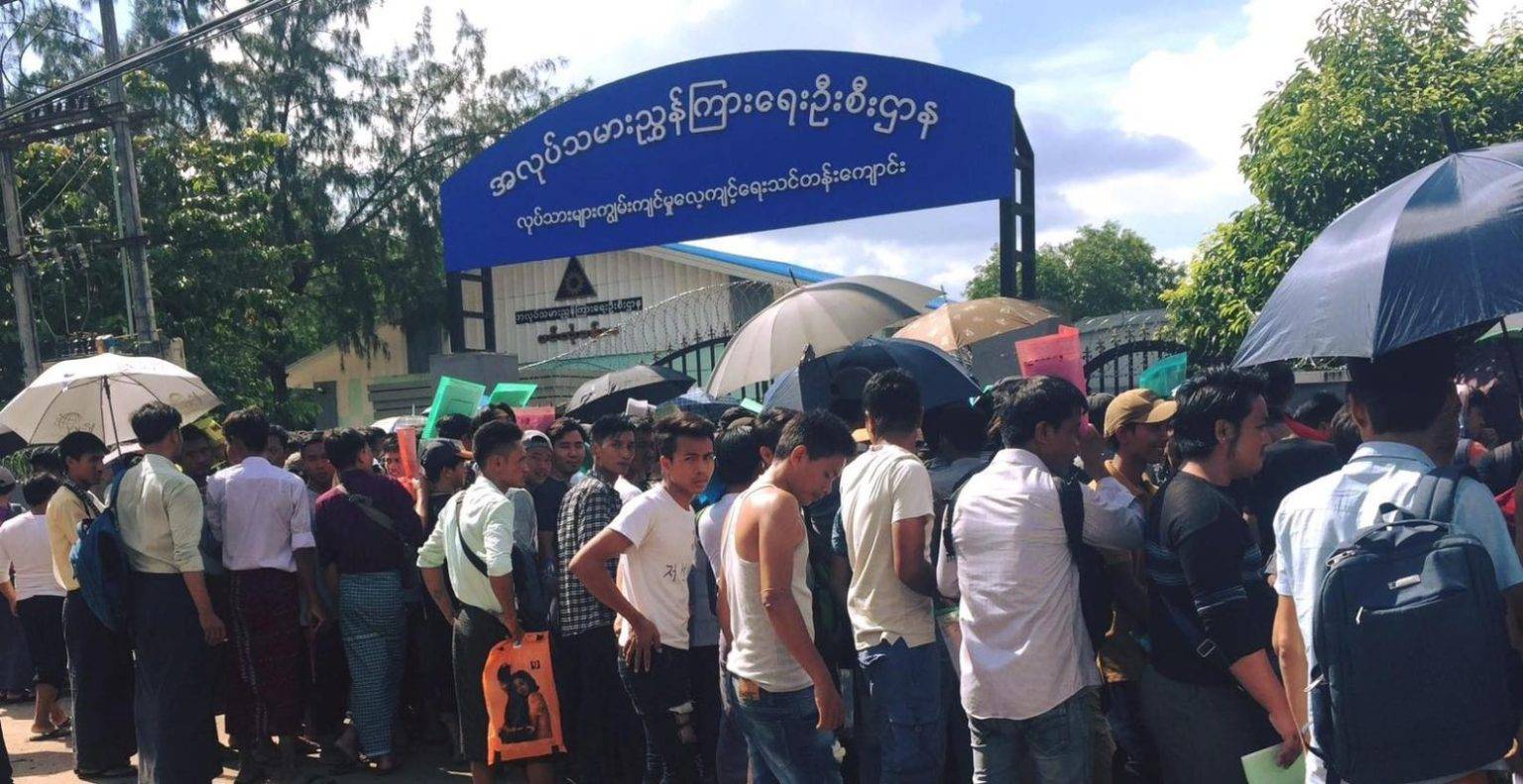
Junta Threatens Myanmar Workers in Korea with 3-Year Overseas Travel Ban if They Fail to Remit 25 Percent of Wages
November 6
The junta has threatened to take action if Myanmar workers who went to South Korea under the G to G system fail to mandatorily remit at least 25 percent of their wages to their families in Myanmar through the official money transfer system, according to workers in Korea.
The Department of Labour under the junta, having found through scrutiny that only a small number of workers who went to South Korea under the G to G system were remitting 25 percent of their earnings to their families in accordance with the directive, issued a notice in November urging them to remit without fail and warning that action would be taken as necessary in case of failure.
Myanmar workers in Korea do not fail to send money; rather, because of the large gap between the official remittance system and the outside exchange rate, they are forced to avoid the official channel, a male worker who went to Korea under the G to G system said.
"Workers aren't failing to send money. They do send it. They send it through other methods. It's because the exchange rates are different. What needs to be done is to make the official RBL remittance rate the same as the outside market rate. If that is done, money will come in through the safer RBL channel. Not just 25 percent, they would even send more," he said.
Because of the gap between the official remittance rate and the outside market rate, when larger amounts are sent, the kyat value received drops noticeably, resulting in a situation where the value of wages earned through hard work is lost, he said.
The commitment contract signed by workers sent abroad under the G to G system includes a provision that if it is found that the terms have been violated, they will be banned from leaving the country for overseas employment for another 3 years.
On August 28, 2024, the junta's Ministry of Labour issued an order stipulating that workers abroad must remit at least 25 percent of the wages they receive to their family members, and that transfers must be made through the official banking system, through holders of a Remittance Business License (RBL) permitted by the Central Bank, or through an official money channel linked to the banking system, with action to be taken in case of failure to remit.
In addition, workers are reportedly facing difficulties because the directives from implementing departments are inconsistent regarding the stipulation to remit once a month or to pool three months' wages and remit once every three months.
"The Labour Minister's side in Nay Pyi Taw says it's acceptable to send the last three months' wages, but the agencies at the grassroots level that deal directly with workers say it must be remitted from beginning to end. What is said at the top and what is done at the bottom don't match. It's no longer even clear which directive workers should follow," said a man preparing to go abroad for work.
According to the stipulation, workers may remit 25 percent of their wages once a month, or may remit at most once every three months a total of three months' wages, at least 25 percent of the total.
Threatening with a penalty that could ban overseas travel for up to 3 years without resolving the exchange rate gap and the lack of trust in the official remittance system amounts to imposing further economic and administrative pressure on workers abroad, a man active in overseas labor affairs pointed out.
"If the rate is different from the outside market rate and they say to remit officially, who would want to remit? The state already collects taxes on workers' wages. It's as if they are making the banks profit even more. If the exchange rate gap is reduced, everyone will remit officially," he said.
The main reason foreign currency remittances through the official channel have declined is that the Central Bank's set foreign exchange rate is nearly double the outside exchange rate, according to domestic and overseas employment agencies.
Previously, agencies had to submit to the Ministry of Labour once every four months workers' evidence of which official bank in Myanmar they used to transfer money by country, but starting in 2026, the ministry has been pressing for monthly submission of the remittances of all workers sent, according to the domestic and overseas employment agency community.
MyoTaw News Channel
Video
Local News
Evening news for November 6, 2026
 Local News
In Sagaing Region, Shwebo town, the military junta arrested two staff — a gate…
 Local News
A Drop bomb was dropped on a traffic jam in Molaing town on the…
 Local News
Two people were killed and five injured when lightning struck in Pinlaung Township and…
